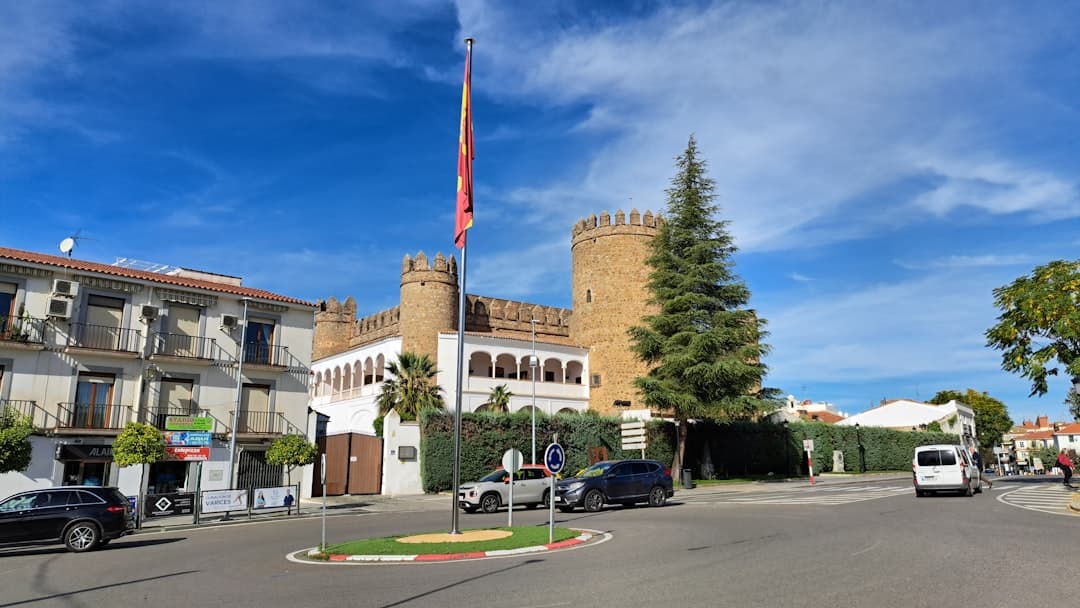
Operated by the state-owned company Paradores de Turismo de España, the Paradores network comprises more than 90 properties spread across Spain, each housed within a building of recognized architectural or historical significance. The portfolio includes medieval castles, former pilgrim hospitals, Renaissance convents, and Moorish palaces, many of which are listed as national monuments.
A Model Rooted in Cultural Preservation
The Paradores concept dates to 1928, when the Spanish government established the network under King Alfonso XIII with the dual aim of preserving historic buildings and stimulating rural tourism. Rather than allowing deteriorating monuments to fall into private disuse or irreversible decay, the model converts them into self-sustaining hospitality operations while maintaining architectural integrity under government oversight.
Properties such as the Parador de Santiago de Compostela, occupying a 15th-century royal hospital adjacent to the city's celebrated cathedral, and the Parador de Sigüenza, a restored 12th-century castle in Castile, illustrate how the network combines accommodation with direct access to heritage sites of European significance.
Regional Economic Impact
Many Paradores are located in smaller towns and rural areas that sit outside mainstream tourist circuits. By placing destination hotels within these communities, the network channels visitor spending into local economies, supporting regional restaurants, artisan markets, and guided tours. Spain's tourism authorities have acknowledged the Paradores model as a tool for distributing tourism more evenly across the country's diverse interior regions, reducing pressure on heavily visited coastal destinations.
European Context
Spain's approach has drawn interest from tourism planners elsewhere in Europe. Portugal operates a comparable network known as Pousadas, and similar state-supported heritage hotel programs exist in parts of Central and Eastern Europe. The Paradores model is frequently cited in discussions around adaptive reuse of historic structures as a sustainable alternative to demolition or indefinite closure.
For visitors prioritizing cultural immersion, the network offers a rare opportunity to sleep within structures that have functioned as fortresses, places of worship, and royal residences across different centuries of Iberian history.
Open Questions
Whether other European governments will expand similar heritage hotel programs, and how the Paradores network will balance modernization demands with conservation obligations, remain subjects of ongoing discussion among heritage tourism stakeholders.
Sources: Paradores de Turismo de España (parador.es), Spain's Ministry of Industry, Trade and Tourism, UNESCO World Heritage documentation, European Travel Commission heritage tourism reports.
This article is based on a verified primary source. The text was editorially reviewed and fact-checked prior to publication.