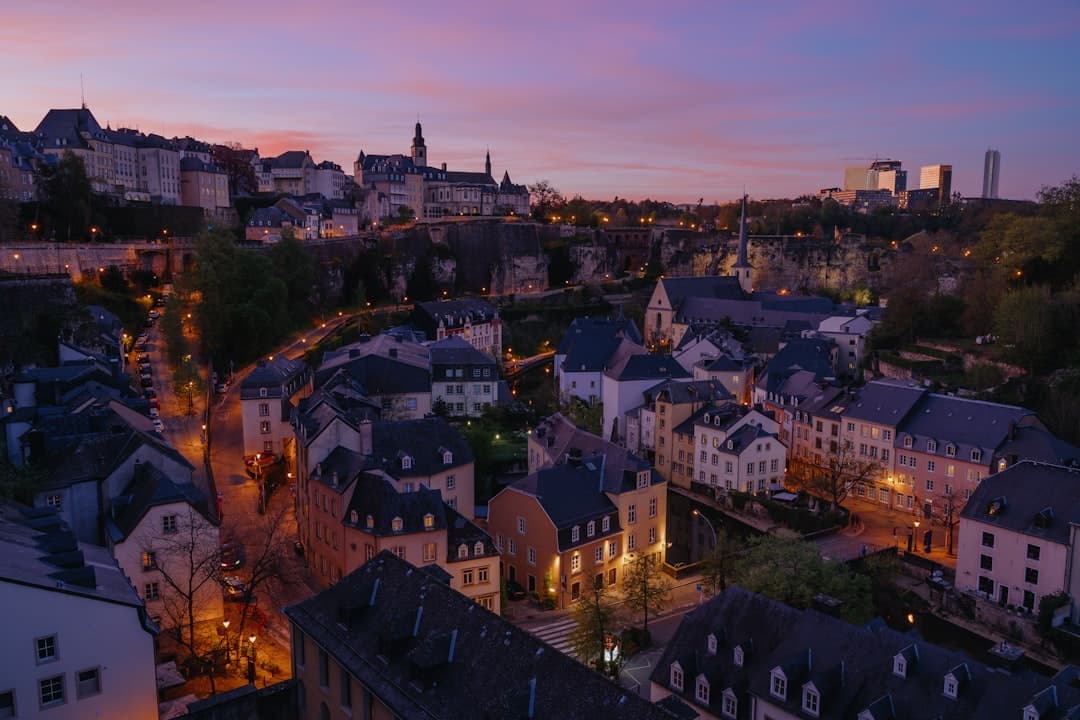
Perched on a dramatic sandstone promontory in the heart of Western Europe, Luxembourg City carries the physical marks of nearly a thousand years of military architecture. The fortifications that once earned the city the designation Gibraltar of the North are now a UNESCO World Heritage Site, recognized alongside the old quarters of the capital since 1994.
A Layered History of Defense
The fortress evolved over successive centuries under a series of European powers, including the Holy Roman Empire, Spain, France, Austria, and Prussia. Each occupying force expanded and reinforced the existing structures, resulting in an extraordinarily complex system of underground tunnels — known locally as the Casemates — stretching for several kilometers beneath the city's streets.
The Bock Casemates and the Pétrusse Casemates represent two of the most historically significant sections open to the public. Carved directly into the rock, these tunnels once housed soldiers, workshops, and artillery batteries capable of sheltering tens of thousands of people.
Deliberate Dismantlement and the Path to Sovereignty
Following the 1867 Treaty of London, Luxembourg was declared a perpetually neutral state and required to dismantle its extensive fortifications. The demolition took well over a decade and removed the majority of the walls, towers, and outer defensive works. What remained was preserved, and those remnants now form the backbone of the country's heritage tourism infrastructure.
Heritage as National Narrative
Luxembourg has incorporated its fortified past into a broader national narrative that emphasizes resilience and strategic importance despite its small geographic size. The fortress heritage features prominently in public education, civic ceremonies, and the country's positioning as a historically significant crossroads of European civilization.
The capital's old town, built atop and around the former defensive structures, functions as a living museum. Residential buildings, government institutions, and public spaces coexist directly alongside preserved medieval and early modern military architecture, making the relationship between heritage and daily life unusually visible.
Open Questions
How Luxembourg balances further urban development with the preservation obligations tied to its UNESCO status remains an ongoing discussion among heritage authorities and urban planners.
Sources: UNESCO World Heritage List (whc.unesco.org), Treaty of London (1867), Luxembourg City Tourist Office (lcto.lu), Musée d'Histoire de la Ville de Luxembourg
This article is based on a verified primary source. The text was editorially reviewed and fact-checked prior to publication.