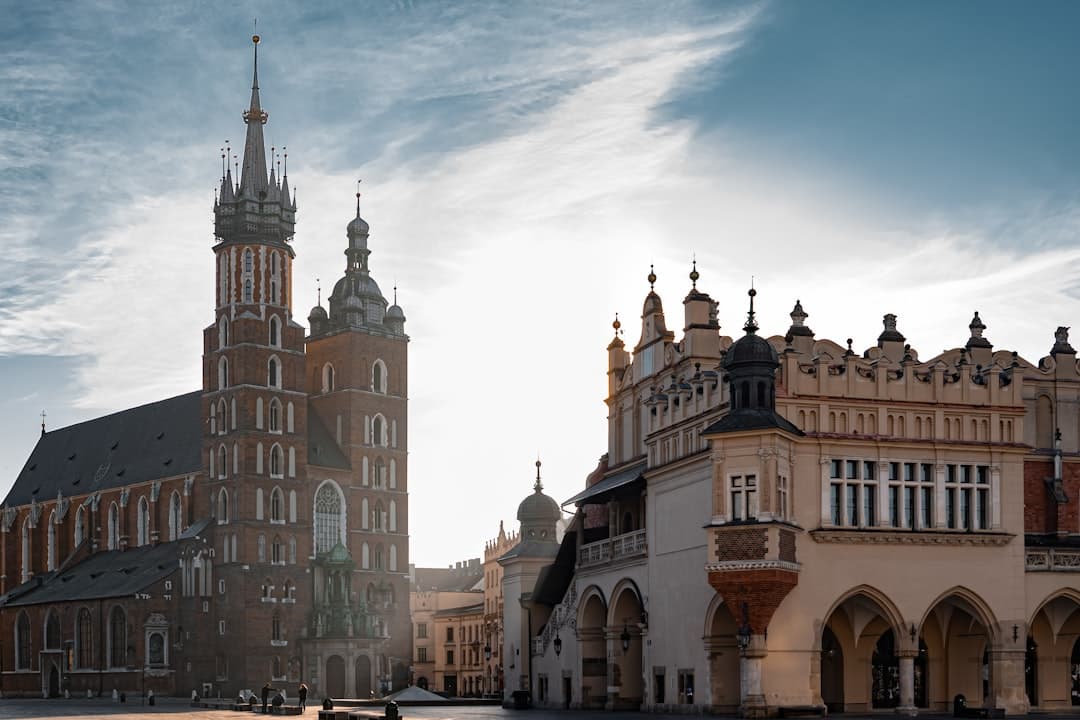
Across Poland, the central market square — known in Polish as the rynek — functions as the geographic and cultural heart of dozens of historic cities. From Kraków and Wrocław to Zamość and Poznań, these open public spaces trace their origins to medieval urban planning, when town charters granted under Magdeburg Law established the market square as the foundation of civic life.
Architecture That Survived Partition and War
Poland's turbulent history — marked by the partitions of the late 18th century, two world wars, and significant destruction during World War II — left deep marks on its built environment. Yet many ryneks have survived, and in several cases were meticulously reconstructed after wartime damage. Warsaw's Old Town Market Square, rebuilt following its near-total destruction in World War II, was inscribed on the UNESCO World Heritage List in 1980, recognizing the reconstruction effort as culturally significant in its own right.
Kraków's Main Market Square, the Rynek Główny, is among the largest medieval market squares in Europe. It retains the Cloth Hall, a Renaissance-era trading structure that has operated continuously for centuries, alongside St. Mary's Basilica and the remnants of a medieval Town Hall tower.
Living Urban Spaces
Unlike many historic sites that function primarily as tourist attractions, Poland's ryneks remain embedded in daily urban life. Municipal markets, seasonal festivals, public ceremonies, and everyday commerce continue to take place within these spaces. Local governments across Poland have invested in the preservation and pedestrianization of rynek areas, reinforcing their role as gathering points rather than museum pieces.
Zamość's Renaissance town center, also a UNESCO World Heritage Site, exemplifies a planned rynek layout influenced by Italian urban theory, reflecting the international architectural currents that shaped Polish cities during the 16th and 17th centuries.
A Record of Urban Identity
The physical fabric of these squares — cobblestones, merchant townhouses, civic buildings, and religious structures — constitutes a layered historical record. Architectural surveys and ongoing archaeological work beneath several ryneks continue to yield findings that expand understanding of medieval and early modern urban development in Central Europe.
Open Questions
As tourism pressure grows in cities such as Kraków and Wrocław, questions remain about how municipalities will balance preservation mandates with the demands of modern urban use. The long-term effects of climate change on historic stonework and open public spaces also represent an emerging concern for conservation authorities.
Sources: UNESCO World Heritage List (whc.unesco.org), Polish National Heritage Board (nid.pl), Encyclopaedia Britannica — Kraków, Magdeburg Law historical record.
This article is based on a verified primary source. The text was editorially reviewed and fact-checked prior to publication.