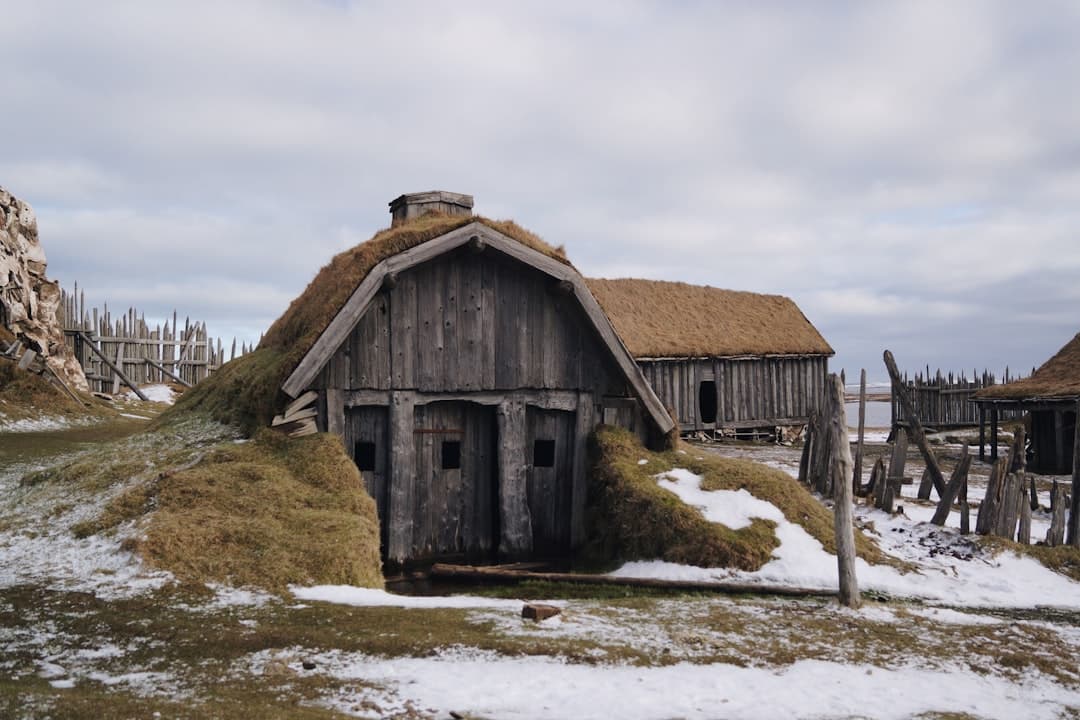
Denmark's landscape tells the story of more than a millennium of continuous settlement, expressed through a built environment that ranges from Stone Age burial mounds to award-winning 21st-century museums. The country's national heritage agency, Slots- og Kulturstyrelsen, maintains an extensive register of protected structures and archaeological sites, reflecting a long-standing institutional commitment to preservation.
Castles and Royal Residences
Among the most visited landmarks is Kronborg Castle in Helsingør, a Renaissance fortress that gained international recognition as the setting for Shakespeare's Hamlet. The castle has been designated a UNESCO World Heritage Site, a status it shares with the Jelling Monuments — a collection of runic stones and burial mounds in Jutland that are widely regarded as foundational to Danish national identity and the country's transition to Christianity in the 10th century.
Rosenborg Castle in Copenhagen, constructed in the early 17th century under King Christian IV, serves as a repository for the Danish Crown Jewels and royal artifacts. Unlike many comparable European palaces, the structure has remained largely unaltered, allowing visitors to engage with its original interiors.
Architecture in Dialogue
Across Danish cities, historic structures frequently stand alongside contemporary architecture. The Aros Aarhus Art Museum, capped by a circular rooftop walkway, sits adjacent to older civic buildings in the country's second-largest city. Copenhagen's Nyhavn harbor, with its rows of 17th- and 18th-century merchant townhouses, now functions as a cultural and commercial hub while retaining its historic streetscape.
Rural Denmark contributes its own layer to this heritage through open-air museums such as Den Gamle By in Aarhus, which reconstructs Danish urban life across several centuries using relocated original structures.
Conservation Policy
Danish law places strict controls on alterations to listed buildings, and municipal planning frameworks typically require new construction in historic zones to respect the scale and character of existing surroundings. This regulatory environment has shaped a built landscape where different eras remain visually legible side by side.
Open Questions
How Denmark balances increasing tourism pressure with the long-term physical integrity of its most fragile archaeological sites remains an ongoing policy discussion. The role of digital documentation and virtual access in relieving physical wear on protected monuments is also under active exploration by heritage professionals across Scandinavia.
Sources: UNESCO World Heritage List; Slots- og Kulturstyrelsen (Danish Agency for Culture and Palaces); Den Gamle By Museum, Aarhus; Visit Denmark official cultural heritage resources.
This article is based on a verified primary source. The text was editorially reviewed and fact-checked prior to publication.