Few civilisations have cast as long a shadow as ancient Greece. Across law, science, politics, art, and language, the contributions of the ancient Hellenic world continue to function as structural pillars of modern society — not as historical curiosities, but as active, operational frameworks.
Democracy and Governance
The concept of democracy, derived from the Greek demos (people) and kratos (power), originated in Athens during the fifth century BCE. The Athenian assembly established a model of participatory governance that has been adapted — and debated — across centuries of political development. Modern constitutional republics, legislative assemblies, and judicial systems draw recognisable lineage from Greek civic structures, including the separation of deliberative and judicial functions.
Philosophy and Science
The work of Socrates, Plato, and Aristotle established foundational methods of inquiry that persist in Western academic tradition. Aristotelian logic, in particular, shaped the development of formal reasoning and remains present in fields ranging from computer science to legal argumentation. Greek natural philosophers introduced the practice of seeking rational, rather than purely mythological, explanations for natural phenomena — a methodological shift considered a precursor to the scientific method.
Medicine and Ethics
The Hippocratic tradition, attributed to the physician Hippocrates of Cos, produced some of the earliest systematic approaches to clinical observation and medical ethics. The Hippocratic Oath, in various adapted forms, continues to be administered in medical institutions across numerous countries, preserving ancient principles of patient care and professional responsibility.
Language and Architecture
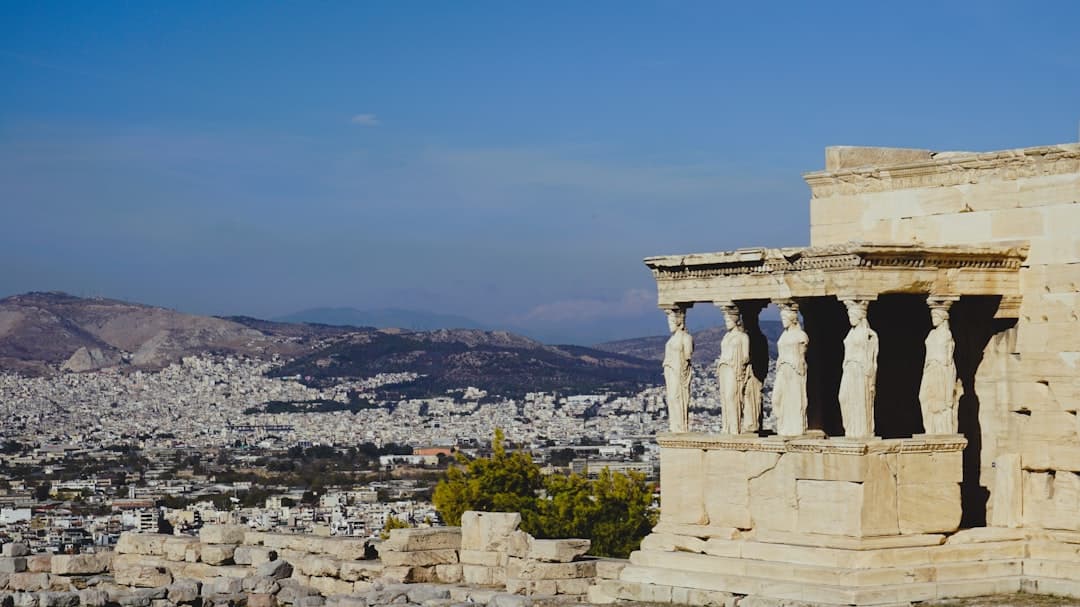
Greek roots permeate scientific, legal, and everyday vocabulary across European languages. Terms spanning biology, astronomy, politics, and technology trace directly to ancient Greek. Architecturally, the Doric, Ionic, and Corinthian orders developed by Greek builders remain in active use in government buildings, museums, and civic structures across Europe and North America.
Open Questions
Scholars continue to debate the extent to which direct transmission versus independent parallel development accounts for Greek influence across non-Western traditions. The question of how selectively modern institutions have adopted — or reinterpreted — ancient Greek concepts also remains a subject of ongoing academic discussion.
Sources: Encyclopaedia Britannica, Oxford Classical Dictionary, World Health Organization (Hippocratic Oath history), Vitruvius' De Architectura (architectural orders), Stanford Encyclopedia of Philosophy.
This article is based on a verified primary source. The text was editorially reviewed and fact-checked prior to publication.