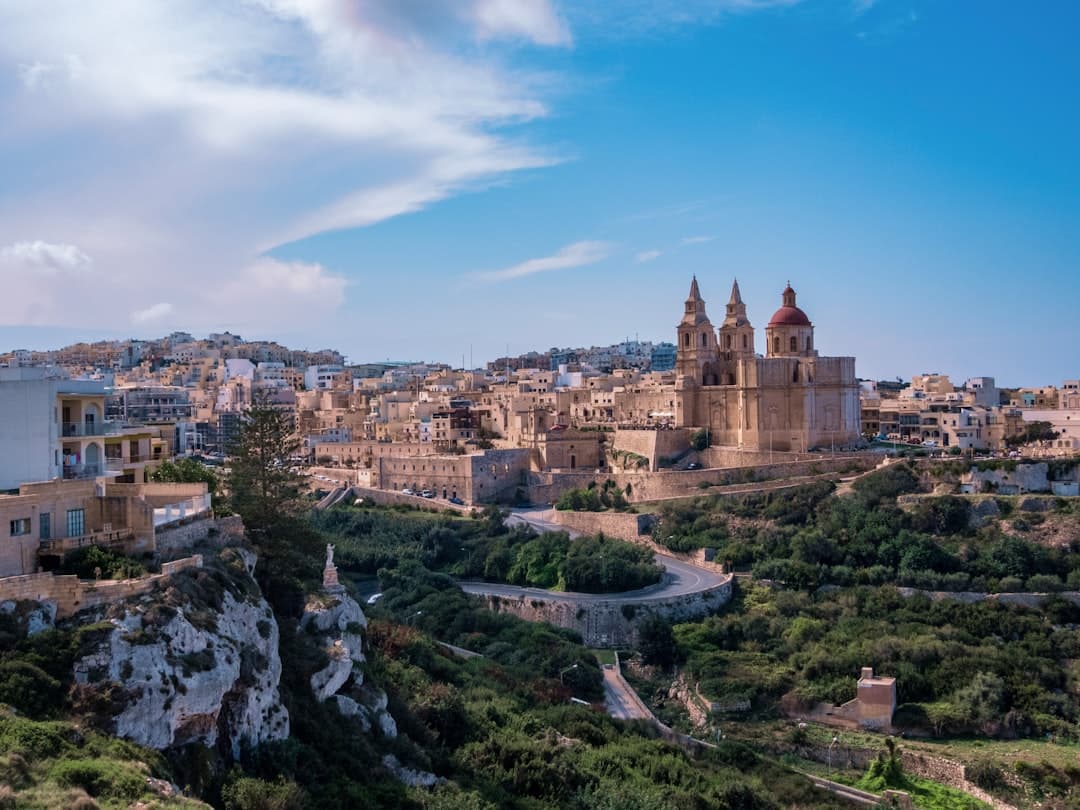
Scattered across the small island nation of Malta and its sister island Gozo, a collection of megalithic temples stands as one of Europe's most significant and least understood archaeological legacies. Constructed during the Maltese Temple Period, broadly dated between approximately 3600 and 2500 BCE, these structures were built by a civilization that left no written records and disappeared without a clear historical successor.
Architecture Without Precedent
The temples, which include well-documented sites such as Ħaġar Qim, Mnajdra, and the Ggantija complex on Gozo, were constructed from coralline limestone and globigerina limestone using techniques that remain a subject of active research. The structures feature characteristic trefoil layouts — rounded apses arranged around a central corridor — a design that appears consistently across multiple sites, suggesting a coordinated architectural tradition rather than isolated construction efforts.
Several temples demonstrate precise astronomical alignments. At Mnajdra, sunlight falls directly through the main doorway at the equinoxes, illuminating specific interior stones in a manner that researchers consider deliberate. Similar solar alignments have been identified at other sites across the archipelago.
Evidence of Ritual and Social Complexity
Excavations at Malta's temples have yielded substantial collections of figurines, animal bones, and decorated pottery, much of which is housed in the National Museum of Archaeology in Valletta. The figurines, some depicting figures of significant size and ambiguous gender, are widely interpreted as having ceremonial or religious functions, though scholarly consensus on their precise meaning has not been reached.
The density of temple construction relative to Malta's small land area points to a society capable of mobilizing significant labor and resources. The builders are believed to have been a distinct population whose genetic and cultural relationship to later Mediterranean civilizations remains an open area of research.
All seven megalithic temple sites in Malta hold UNESCO World Heritage status, a designation that has supported ongoing conservation and international research collaboration.
Open Questions
What caused the abrupt disappearance of the temple-building culture around 2500 BCE remains unresolved. Whether the sites functioned as communal gathering places, elite ceremonial centers, or something without a modern equivalent continues to be debated among archaeologists.
Sources: UNESCO World Heritage List, Heritage Malta, Journal of Mediterranean Archaeology, National Museum of Archaeology (Valletta)
This article is based on a verified primary source. The text was editorially reviewed and fact-checked prior to publication.