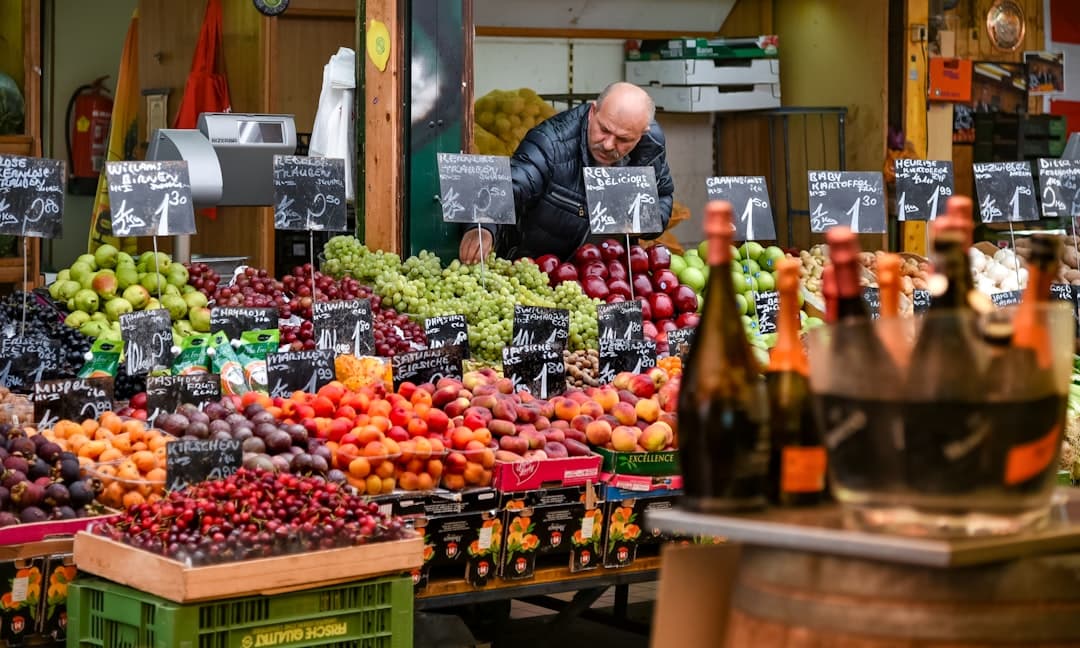
From the vineyards of Burgundy to the vegetable plots of rural Bavaria, a structural shift is underway in how Europeans produce, distribute, and consume food. The farm-to-table model — broadly defined as sourcing ingredients directly from local or regional producers with minimal intermediary steps — has moved well beyond restaurant menus and farmers' markets to influence supply chain logistics, public procurement, and agricultural subsidy frameworks.
Policy as a Catalyst
The European Union's Farm to Fork Strategy, a central pillar of the European Green Deal, has provided formal institutional backing for shorter food supply chains. The strategy sets broad targets for reducing pesticide use, expanding organic farming, and improving nutritional labeling — goals that broadly align with the principles underpinning local food sourcing. Member states have begun translating these directives into national action plans, with countries including France, Denmark, and Austria making measurable commitments to increase the share of locally sourced food in public canteens, school cafeterias, and hospital kitchens.
France's EGAlim laws, for instance, require a defined proportion of food served in public catering to meet quality, sustainability, or local production criteria. Similar legislative frameworks have been introduced or are under discussion in several other EU member states, signaling a broader regulatory trend rather than isolated national experiments.
Urban Markets and Consumer Demand
Consumer behavior has played an equally significant role in driving the movement forward. Surveys conducted across multiple European markets consistently show growing public interest in food provenance, with shoppers increasingly willing to pay a premium for products carrying regional certification labels or direct-farm branding. The economic disruptions and supply chain vulnerabilities exposed during the COVID-19 pandemic further heightened public awareness of the risks associated with globalized food systems, prompting renewed interest in domestic and regional alternatives.
Urban food markets have proliferated across European cities in recent years. Cities such as Berlin, Copenhagen, and Barcelona have seen a marked expansion of weekly producers' markets where direct consumer-farmer transactions take place without wholesale intermediaries. Community-supported agriculture schemes — arrangements in which consumers pay farmers in advance for a seasonal share of their harvest — have also grown substantially across Northern and Western Europe.
Challenges of Scale and Access
Despite the momentum, the farm-to-table model faces structural obstacles that prevent it from becoming universally accessible. Local sourcing tends to carry higher retail price points, placing it out of reach for lower-income households in many regions. Distribution logistics remain a persistent challenge: small and medium-sized farms often lack the infrastructure to supply large urban centers consistently, particularly outside of peak growing seasons.
Cold chain limitations, fragmented rural road networks, and the administrative burden of food safety certification continue to disadvantage smaller producers relative to large agribusiness operations. Advocates of the movement argue that targeted subsidies and cooperative distribution models can offset some of these barriers, though implementation varies widely across EU member states.
The Role of Gastronomy
European haute cuisine has historically functioned as a leading indicator of broader food trends, and the farm-to-table movement is no exception. A generation of chefs trained in or influenced by New Nordic cuisine principles — emphasizing foraged, seasonal, and hyper-local ingredients — has helped normalize direct producer relationships in professional kitchen culture. That influence has since filtered into mid-range restaurants and casual dining across the continent, normalizing menu language around provenance and seasonality for a wider dining public.
Trade bodies representing European farmers have broadly welcomed the trend, while also cautioning that commercial viability must accompany any policy-driven transition. The debate over how to scale local food systems without replicating the inefficiencies of fragmented pre-industrial agriculture remains active among agronomists, economists, and policymakers alike.
Open Questions
Can short supply chain models be economically viable at a scale sufficient to meaningfully reduce Europe's dependence on globalized food networks? How will climate variability affect the reliability of regional sourcing in drought- or flood-prone agricultural zones? And will EU subsidy reform under the next Common Agricultural Policy cycle accelerate or complicate the transition?
Sources: European Commission Farm to Fork Strategy documentation; French EGAlim legislation texts; European Green Deal policy framework; publicly available consumer research from European food industry bodies; New Nordic Food Manifesto and related academic literature.
This article is based on a verified primary source. The text was editorially reviewed and fact-checked prior to publication.


