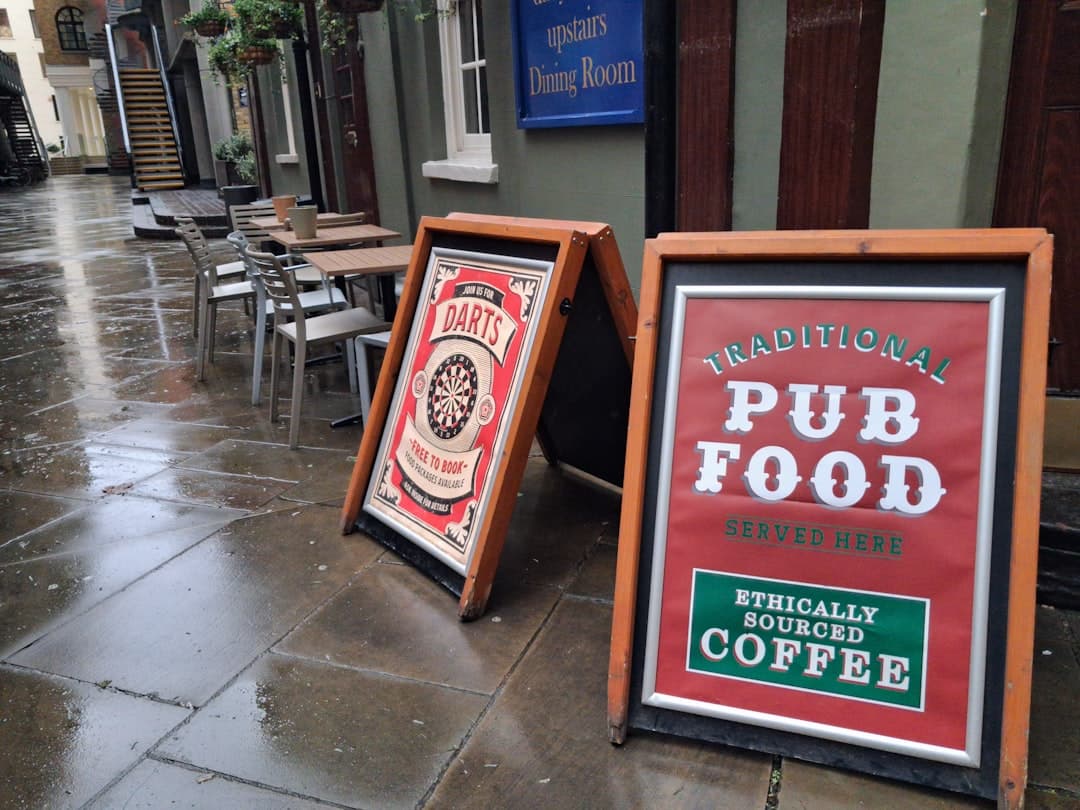
There is a particular kind of magic that happens when a city decides its pavements are as worthy of great cooking as any white-tablecloth dining room. London has always understood this instinctively. Walk through Borough Market on a crisp morning, drift past the rumbling carts of Brick Lane, or linger near the waterside stalls of Greenwich, and you will find something remarkable: a city feeding itself with joy, creativity, and an almost reckless generosity of flavour.
A City That Eats With Its Hands
London's street food culture has matured into something far beyond the humble hot dog or the paper-wrapped bag of chips — though both retain a certain timeless charm. Increasingly, the city's outdoor markets and pop-up kitchens are the proving grounds for some of its most inventive culinary thinking. Young chefs who might once have aspired to brigade kitchens are now building devoted followings from behind a folding table and a single gas burner.
The aromas tell the story before the food even appears. Char and citrus from a Peruvian anticucho grill. The warm, yeasty cloud rising from a Georgian khachapuri boat, its cheese bubbling amber at the edges. The sharp, clean hit of Vietnamese pickled daikon cutting through rich pork belly, folded into a bánh mì so generously stuffed it barely holds together. These are not approximations of cuisines — they are the real thing, prepared by people who carry these flavours in their memories.
Markets as Cultural Crossroads
The Old Favourites, Reimagined
Borough Market remains the undisputed cathedral of London street eating. Yet even here, the energy has shifted. Alongside the celebrated cheese mongers and heritage bread bakers, newer voices are emerging — a Kenyan trader serving smoky nyama choma alongside fermented uji porridge, a Basque pintxos counter where salt cod and anchovy are laid over pillows of grilled bread with the kind of restraint that demands attention. The market no longer merely curates tradition; it actively generates it.
East London's Restless Creativity
Cross the city eastward and the temperature of innovation rises noticeably. Spitalfields and its surrounding streets have long been a landing ground for immigrant communities, and the food reflects every arrival, every reinvention. More and more, traders here are blending culinary identities in ways that feel neither forced nor gimmicky — a Japanese-Jamaican fusion bao that manages to honour both lineages, or an Ethiopian-Italian hybrid that combines injera's sourness with the depth of a slow-braised ragu. These are dishes that could only exist in London, born from proximity and curiosity.
The Architecture of a Perfect Street Meal
Part of what makes London's street food so compelling is its democratic theatricality. There are no reservations, no dress codes, no sommelier hovering at your elbow. You queue, you watch, you receive something warm wrapped in paper or balanced in a cardboard tray, and you find a wall to lean against or a kerb to perch on. The eating is immediate and unmediated. A proper lamb shawarma, carved from a slow-turning spit and loaded with tahini and pickled turnip, demands to be eaten standing up, slightly too fast, with sauce on your chin. That is not a flaw in the experience. That is the experience.
Sustainability on the Street
In recent months, a quieter revolution has been unfolding alongside the culinary one. Street food vendors across London are increasingly embracing sustainable sourcing, compostable packaging, and zero-waste cooking philosophies. Offcut meats that would once have been discarded are slow-cooked into extraordinary fillings. Seasonal vegetables dictate the menu rather than decorate it. The street food stall, once associated with convenience over conscience, is becoming a model for responsible hospitality — nimble enough to adapt, small enough to care deeply about every ingredient.
Why It Matters Beyond the Meal
Street food is never only about eating. It is about a city's willingness to share itself publicly, to let its cultures brush against one another in a queue, to find common ground in the simple act of hunger satisfied. London's outdoor food culture is a living map of its population — restless, layered, perpetually arriving from somewhere new and bringing something worth tasting. In a world that can feel increasingly divided, there is something quietly powerful about a city where the best meal of the day might cost very little, be made by someone whose grandmother never imagined living here, and be eaten in the rain with complete and uncomplicated happiness.
London feeds the world because the world, in some meaningful sense, now lives here. And it has never tasted better.
Outstanding Questions
How are second-generation immigrant traders reshaping traditional family recipes for London's diverse street food audiences?
Could London's sustainable street food movement set a new standard for low-waste hospitality across Europe's major cities?
As pop-up street food culture grows, what does its rise mean for the future of traditional brick-and-mortar restaurants in London?