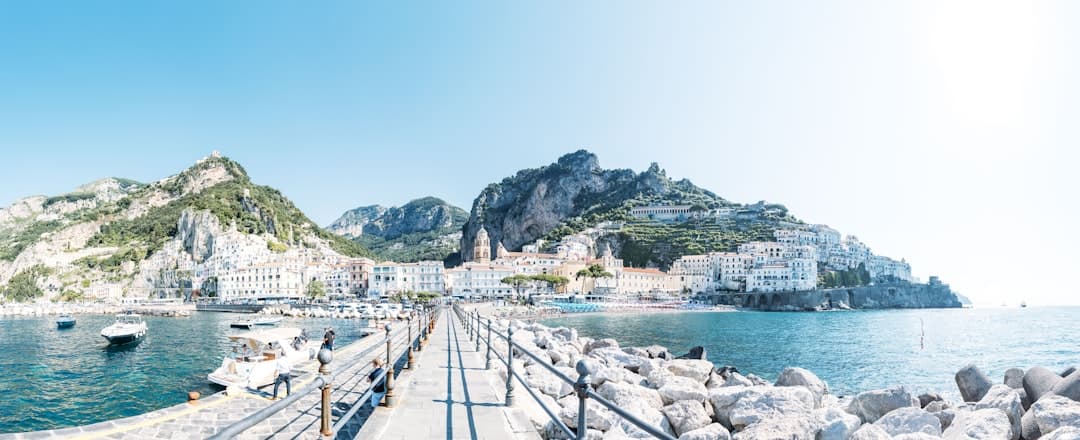
For decades, European coastal tourism concentrated around a familiar circuit — the Algarve's most photographed cliffs, the Amalfi Coast's terraced villages, the Greek islands most accessible by budget airline. That pattern appears to be shifting. Travel industry trackers and booking platforms have reported growing search volumes for smaller, less infrastructurally developed coastal areas across the continent, suggesting a measurable redistribution of visitor interest.
Where the Interest Is Pointing
Albania's Riviera, stretching along the Ionian Sea between Sarandë and Vlorë, has moved from near-obscurity to consistent placement on European travel rankings. The coastline features clear water, largely undeveloped beaches, and relatively low visitor density compared to neighboring Mediterranean destinations. Albania's ongoing infrastructure investments and simplified visa arrangements for EU and many non-EU travelers have contributed to its growing accessibility.
Slovenia's short Adriatic coastline — anchored by the historic town of Piran — draws visitors seeking a compact alternative to Croatia's more heavily trafficked Dalmatian Coast. Piran's Venetian architectural heritage and pedestrian-friendly old town have long attracted a modest tourism base, though searches and bookings for the area have grown significantly in recent travel cycles.
Portugal's Alentejo Coast, south of Lisbon and north of the Algarve, presents a contrasting profile to the country's better-known southern beaches. The area features protected natural landscapes under the Southwest Alentejo and Vicentine Coast Natural Park designation, limiting large-scale resort development and preserving long stretches of Atlantic shoreline with minimal commercial infrastructure.
Factors Behind the Shift
Several forces appear to be converging. Overcrowding at established coastal destinations has become a documented concern in multiple European countries. Barcelona, Dubrovnik, and Santorini have each implemented or discussed visitor management policies in response to the pressure that mass tourism places on local infrastructure, housing, and ecosystems. These measures, alongside widely circulated reporting on overtourism, have raised awareness among travelers about the trade-offs involved in choosing conventional itineraries.
Remote and hybrid work arrangements, which expanded significantly following 2020 and have remained partially in place for portions of the European and international workforce, have also altered travel timing. Visitors with schedule flexibility can reach off-peak destinations during shoulder seasons, reducing the logistical premium that once made lesser-known areas less practical for time-constrained travelers.
Low-cost carrier route expansion has further opened previously underserved coastal regions. Airports in smaller cities across the Balkans, southern Portugal, and the eastern Adriatic have received new or expanded seasonal service, lowering the barrier to entry for destinations that once required multi-leg itineraries.
Environmental and Local Considerations
The movement of visitor interest toward less-developed coastlines carries its own set of implications. Conservation bodies and local governments in several of these emerging areas have flagged concerns about whether existing infrastructure can absorb increased tourism without replicating the problems that displaced visitors from more established destinations in the first place.
Protected coastal zones in Portugal and elsewhere operate under European Union habitat directives that restrict certain types of development, offering a degree of structural protection. However, those frameworks do not automatically address pressure on water supplies, waste management systems, or housing affordability in small coastal communities.
Regional tourism authorities in Albania, Montenegro, and parts of Greece have published sustainable tourism strategies aimed at managing growth, though implementation capacity varies considerably across different municipalities and regions.
The Broader Pattern
The trend reflects a longer arc in European travel behavior that has been building since at least the mid-2010s, when the term "overtourism" entered mainstream usage following reports from Venice, Amsterdam, and the Balearic Islands. What appears different heading into 2026 is the breadth of alternative destinations now being considered, extending well beyond the second-tier options that initially absorbed displaced interest from the most congested hubs.
Open Questions
Whether smaller coastal destinations can develop tourism economies without recreating the density problems seen elsewhere remains an open question. How EU environmental frameworks will interact with growing development pressure in newly popular coastal zones also warrants continued attention. The degree to which remote work flexibility will persist — and continue to shape travel patterns — adds further uncertainty to longer-range projections.
Sources: European Travel Commission (etc.europa.eu), Portugal's Southwest Alentejo and Vicentine Coast Natural Park official designation (ICNF), Albanian Ministry of Tourism infrastructure reporting, Eurocontrol air traffic and route data, EU Habitats Directive (Council Directive 92/43/EEC).
This article is based on a verified primary source. The text was editorially reviewed and fact-checked prior to publication.