Greece's archaeological landscape spans thousands of years of recorded history, encompassing sites associated with Bronze Age civilisations, classical city-states, and Hellenistic culture. Across the mainland and its islands, a number of locations stand out for their historical significance, state of preservation, and accessibility to the public.
The Acropolis of Athens
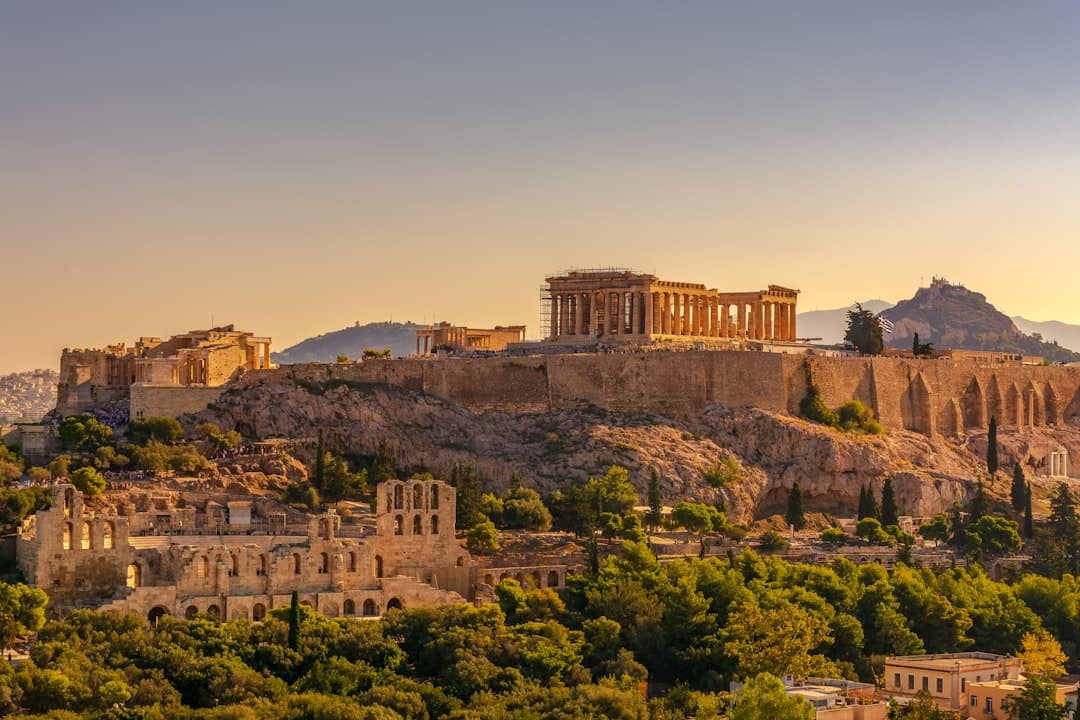
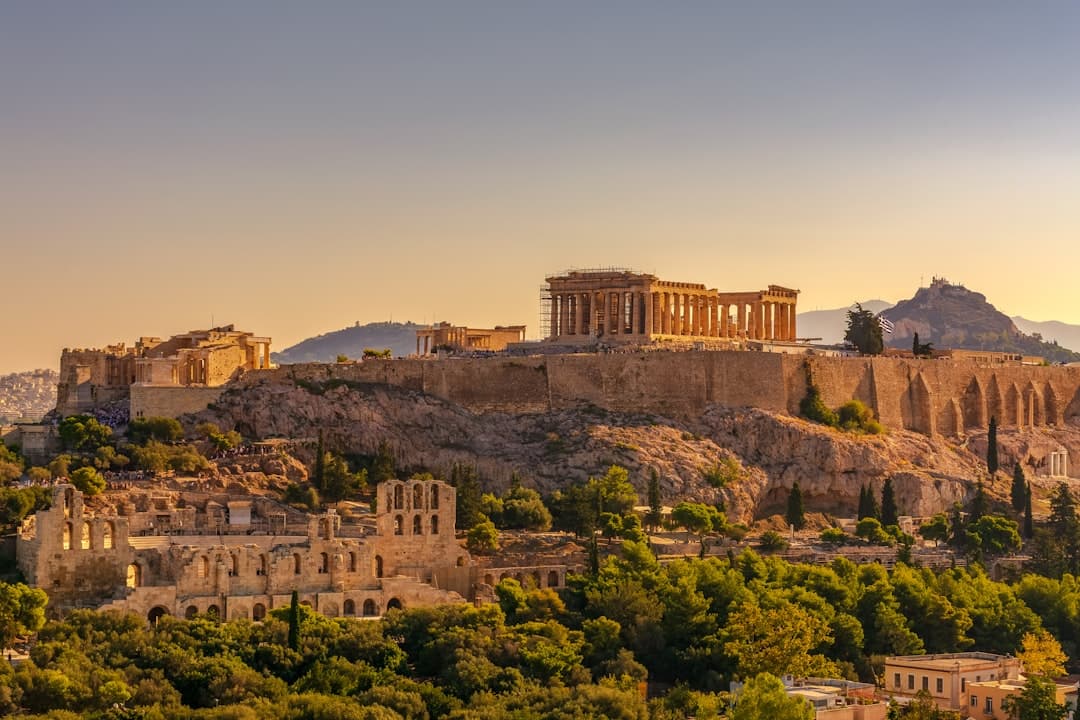
The Acropolis remains the most recognisable ancient site in Greece. Situated on a limestone hill above Athens, the complex includes the Parthenon, the Erechtheion, and the Temple of Athena Nike, all dating primarily to the fifth century BCE. The site is a UNESCO World Heritage designation holder and is managed by the Greek Ministry of Culture and Sports.
Delphi
Located on the slopes of Mount Parnassus in central Greece, Delphi served as the seat of the Oracle of Apollo and functioned as a religious and political centre throughout the ancient Greek world. The site includes the Temple of Apollo, the ancient theatre, and the Sanctuary of Athena Pronaia. It also carries UNESCO World Heritage status.
Olympia
Situated in the western Peloponnese, Olympia was the original home of the ancient Olympic Games, held in honour of Zeus. The archaeological zone contains ruins of the Temple of Zeus, the Temple of Hera, and the ancient stadium. An on-site museum houses the Hermes of Praxiteles and other significant sculptures.
Mycenae and Epidaurus
Mycenae, associated with the Bronze Age civilisation that bears its name, contains the Lion Gate and the Treasury of Atreus. Nearby Epidaurus is renowned for its ancient theatre, considered one of the best-preserved in the world and still used for performances during the summer festival season. Both sites are part of a shared UNESCO listing.
Knossos, Crete
On the island of Crete, Knossos represents the centre of Minoan civilisation, with occupation dating back several millennia. The partially reconstructed palace complex draws significant scholarly attention and remains one of the most visited sites in Greece.
Open Questions
Ongoing excavations at several Greek sites continue to yield new findings, raising questions about how newly discovered artefacts will be incorporated into existing historical frameworks and which sites may gain prominence as research advances.
Sources: UNESCO World Heritage Centre (whc.unesco.org), Greek Ministry of Culture and Sports (culture.gov.gr), Hellenic Ministry of Tourism
This article is based on a verified primary source. The text was editorially reviewed and fact-checked prior to publication.