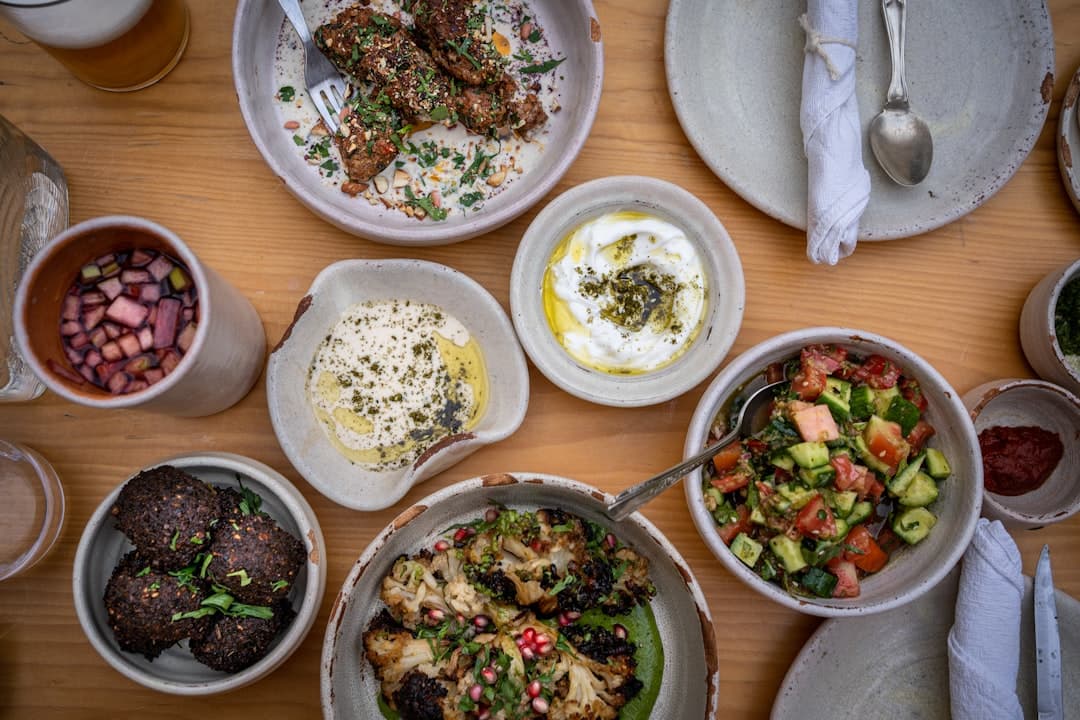
Cyprus has developed a distinct culinary tradition shaped by its Mediterranean location and centuries of cultural exchange with Greek, Ottoman, Middle Eastern, and Levantine influences. Travelers to the island encounter a food culture rooted in fresh local ingredients, grilled meats, and slow-cooked preparations passed down through generations.
Meze: The Foundation of the Cypriot Table
Meze is the defining dining format of Cyprus, consisting of numerous small dishes served sequentially over an extended meal. A full Cypriot meze can include dips, grilled vegetables, cheese, seafood, and meat preparations. It functions as both a social ritual and a comprehensive introduction to the island's flavors.
Halloumi
Halloumi is perhaps the most internationally recognized Cypriot food product. This semi-hard cheese, traditionally made from a mixture of goat and sheep milk, carries Protected Designation of Origin status from the European Union. It is grilled, fried, or served fresh and appears across both casual and formal dining settings on the island.
Souvla and Souvlaki
Souvla refers to large cuts of meat — typically pork, lamb, or chicken — skewered and slow-cooked over charcoal. Souvlaki follows a similar preparation using smaller pieces. Both are deeply embedded in Cypriot social gatherings, particularly during public holidays and family celebrations.
Kleftiko
Kleftiko is a slow-cooked lamb dish traditionally prepared by sealing seasoned meat in a clay oven or wrapped parcel. The method produces tender, richly flavored meat and remains a staple of traditional Cypriot restaurants across the island.
Loukoumades and Desserts
Loukoumades — deep-fried dough balls drizzled with honey and cinnamon — represent the sweeter side of Cypriot cuisine. Glyka tou koutaliou, or spoon sweets, are another traditional preparation: preserved fruits or vegetables served in small portions as a gesture of hospitality.
Commandaria Wine
No account of Cypriot food culture is complete without Commandaria, a sweet dessert wine produced in the foothills of the Troodos Mountains. Historical records place its production among the oldest continuously made wines in the world.
Open Questions
As Cypriot cuisine gains wider international recognition, researchers and food historians continue to examine how political division of the island since 1974 has influenced diverging culinary traditions in the north and south.
Sources: European Commission PDO Registry, Cyprus Tourism Organisation, Oxford Companion to Food (Alan Davidson)
This article is based on a verified primary source. The text was editorially reviewed and fact-checked prior to publication.