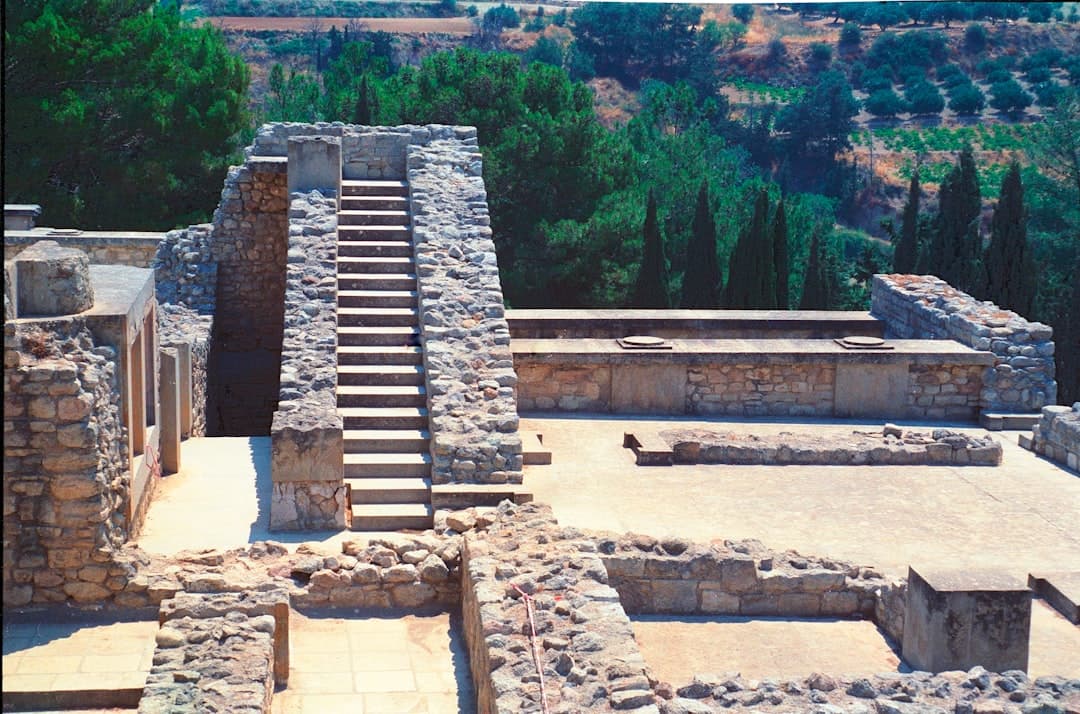
Greek cuisine draws on thousands of years of culinary tradition, shaped by the Mediterranean climate, regional agriculture, and cultural exchange across the Aegean. Travelers visiting Greece encounter a food culture deeply tied to local ingredients, communal dining, and seasonal rhythms.
Staples of the Greek Table
Moussaka stands among the most recognized dishes in Greek cooking. Layers of minced meat, sliced eggplant, and béchamel sauce are baked together into a dense, savory casserole. The dish is widely available across mainland Greece and the islands, and is commonly found in traditional tavernas known as estiatorio.
Spanakopita, a savory pastry filled with spinach and feta cheese wrapped in phyllo dough, serves as both a street food and a sit-down dish. Feta itself holds Protected Designation of Origin status under European Union law, meaning only cheese produced in specific regions of Greece using designated milk can legally carry the name.
Souvlaki — skewered and grilled meat, typically pork or chicken — functions as the country's most prevalent fast food. It is served either on a skewer or wrapped in pita bread with tomato, onion, and tzatziki, a sauce made from strained yogurt, cucumber, and garlic.
Regional and Coastal Specialties
Grilled octopus is a fixture of coastal menus, particularly on the Aegean islands. Freshly caught octopus is traditionally sun-dried before grilling, a preparation method visible at fishing ports across the country. Saganaki, pan-fried cheese — typically graviera or kefalograviera — is another widely served dish, often flambéed tableside.
Pastitsio, sometimes described as a Greek baked pasta, layers tubular noodles with ground meat and béchamel in a construction similar to moussaka. It is a common fixture of family cooking and Sunday meals throughout the country.
The Role of Mezedes
Greek dining culture frequently centers on mezedes, small shared plates served alongside wine or ouzo. Dishes such as taramasalata, a cured fish roe dip, dolmades — vine leaves stuffed with rice and herbs — and various grilled vegetables form the backbone of this communal style of eating, which remains a defining feature of Greek hospitality.
Open Questions
Culinary scholars continue to examine the extent to which Ottoman, Byzantine, and ancient Hellenic influences each shaped the modern Greek kitchen, and regional variation across Greece's many islands remains incompletely documented in English-language food literature.
Sources: European Commission PDO/PGI Register, Greek National Tourism Organisation (visitgreece.gr), Oxford Companion to Food (Alan Davidson), UNESCO Intangible Cultural Heritage documentation on Mediterranean diet.
This article is based on a verified primary source. The text was editorially reviewed and fact-checked prior to publication.