Austrian cuisine draws on centuries of Central European culinary tradition, blending influences from the former Habsburg Empire into a distinctive national food culture. Visitors to Austria encounter a range of dishes that have remained staples of the country's restaurants, markets, and home kitchens for generations.
Savory Foundations
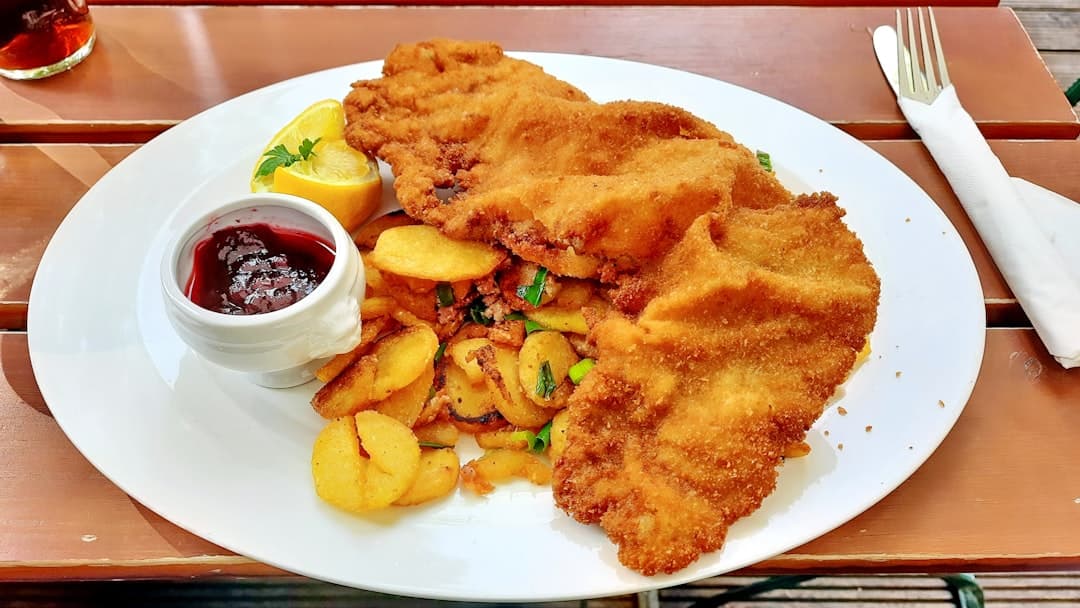
The Wiener Schnitzel stands as perhaps the most internationally recognized Austrian dish. Consisting of a thin, breaded and pan-fried veal cutlet, it is legally protected under Austrian food standards — a version made with pork must be labeled differently. The dish is typically served with potato salad or parsley potatoes and a wedge of lemon.
Tafelspitz, a boiled beef dish served with broth, apple-horseradish sauce, and chive cream, holds a prominent place in Viennese culinary history and remains a fixture on menus across the country. Goulash, inherited from Hungarian neighbors during the Habsburg period, appears throughout Austria in a slow-cooked, paprika-spiced form often accompanied by bread dumplings or Semmelknödel.
Dumplings and Sides
Knödel — dumplings made from bread, potatoes, or semolina — function as a cornerstone side dish in Austrian cooking. Käsespätzle, soft egg noodles layered with melted cheese and topped with fried onions, originates from the western Alpine regions and is common in Tyrolean and Vorarlberg cuisine.
Pastries and Desserts
Austrian pastry tradition carries significant international influence. The Sachertorte, a dense chocolate cake layered with apricot jam and covered in dark chocolate glaze, was created in Vienna in the 19th century and remains closely associated with the city. Apfelstrudel, a thin-pastry apple pastry dusted with powdered sugar, traces its roots to Ottoman-influenced baking techniques that spread through the Habsburg territories. Kaiserschmarrn, a shredded caramelized pancake served with plum compote, is widely available in both alpine huts and urban restaurants.
These dishes reflect Austria's geographic position at the crossroads of Germanic, Slavic, and Mediterranean culinary traditions, and continue to define the country's food identity for both residents and visitors.
Open Questions
How have contemporary Austrian chefs reinterpreted traditional recipes in response to changing dietary preferences and ingredient availability? To what extent do regional variations across Austria's nine federal states distinguish local food cultures from the dominant Viennese tradition?
Sources: Austrian Federal Economic Chamber (WKO), Vienna Tourist Board, Österreich Werbung (Austria Tourism), Encyclopedia Britannica — Austrian cuisine entries.
This article is based on a verified primary source. The text was editorially reviewed and fact-checked prior to publication.