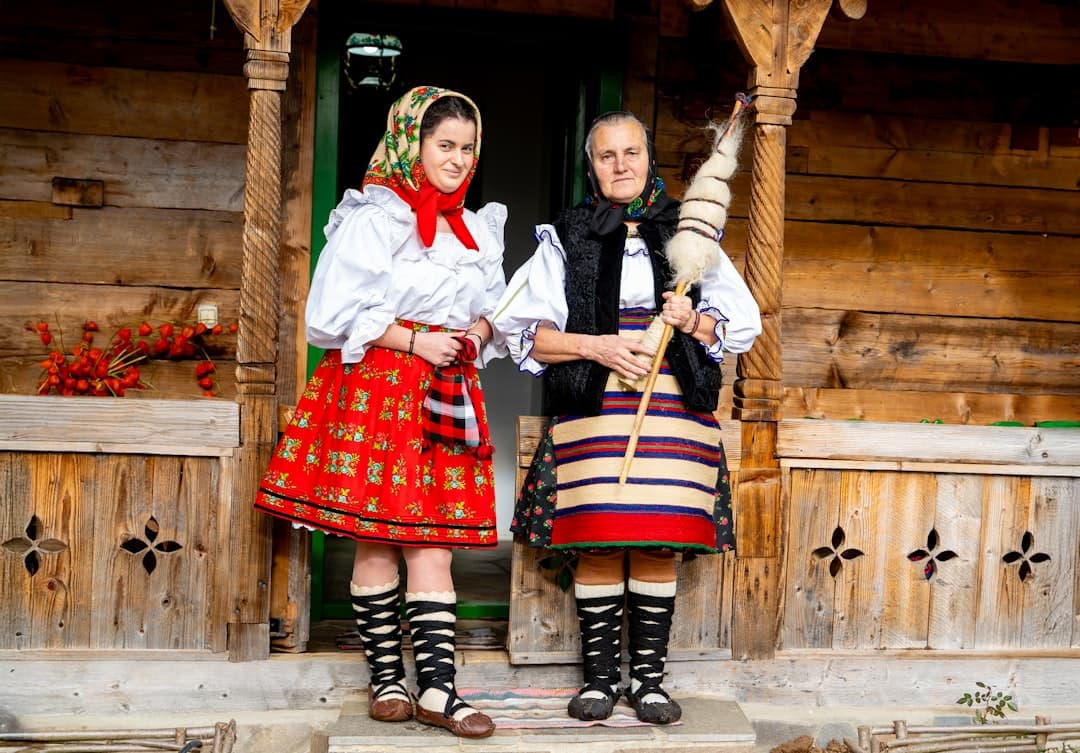
From the painted egg markets of rural Romania to the torch-lit processions of southern Spain, Europe's patchwork of local customs is not fading quietly into history. Across the continent, regional traditions that were once considered vulnerable to modernization are demonstrating a measurable resilience, sustained by grassroots enthusiasm and, increasingly, by structured institutional support.
A Continent of Micro-Cultures
Europe's cultural geography has always been defined less by national borders than by the distinct practices of its valleys, coastal villages, and mountain communities. The transhumance routes of the Pyrenees, recognized by UNESCO as an Intangible Cultural Heritage, still see shepherds guide flocks between seasonal pastures each autumn. In Bavaria and Austria, the Almabtrieb — the ceremonial descent of decorated cattle from high Alpine pastures — continues to draw participants from the surrounding agricultural communities, as it has for centuries.
In the Baltic states, the midsummer celebration of Jāņi in Latvia and its equivalents in Lithuania and Estonia remain among the most widely observed holidays on the annual calendar. These events involve the gathering of specific wildflowers and herbs, the singing of traditional dainas, and the lighting of bonfires — practices that survived Soviet-era cultural suppression and have since experienced a documented renewal.
Digital Tools and the Preservation Impulse
One factor contributing to the persistence of local traditions is the emergence of digital archiving and community platforms that allow customs to be documented and transmitted beyond their geographic origins. Organizations such as the European Centre for Living Traditions have worked alongside national folklore institutes to create accessible digital repositories of songs, dances, and craft techniques.
Social media has played a parallel role, enabling communities to share the visual spectacle of their festivals with global audiences. The Carnival of Venice, the Semana Santa processions in Andalusia, and the Up Helly Aa fire festival in Shetland all attract significant international attention through visual platforms, which in turn generates tourism revenue that local organizers often redirect into the events themselves.
Tourism, Identity, and Policy Frameworks
Regional tourism strategies across the European Union have increasingly incorporated cultural heritage as a central pillar. EU-funded programs under frameworks such as Creative Europe have directed resources toward safeguarding and promoting intangible cultural heritage at the local level. Several member states have also enacted domestic legislation providing legal recognition and financial support for traditions deemed at risk of disappearance.
Scholars of European ethnology have observed that periods of political uncertainty or rapid social change often produce a heightened interest in local and regional identity. The years following the 2008 financial crisis, as well as the period of social restriction during the COVID-19 pandemic, appear to have accelerated this pattern in several regions, with community participation in traditional events rising noticeably once restrictions lifted.
Younger Generations as Custodians
Perhaps the most structurally significant development is the engagement of younger Europeans in maintaining these practices. Folk music schools in Ireland, Poland, and Hungary report growing enrollment. Craft apprenticeship programs in ceramics, lace-making, and traditional textile dyeing operate in communities across Portugal, Greece, and the Czech Republic.
Educational curricula in several countries now formally include regional cultural heritage, ensuring that children encounter local traditions not only through family practice but also through structured instruction. This institutionalization of folk knowledge marks a departure from earlier generations, when such transmission depended almost entirely on informal household and community channels.
The picture that emerges is one of adaptation rather than simple continuity. European local traditions are being renegotiated by the communities that hold them, shaped by new tools, new economic incentives, and new understandings of what cultural inheritance means in a mobile and interconnected world.
Open Questions
How will increased commercialization affect the authenticity and community ownership of local traditions? Can digital preservation fully substitute for lived, embodied practice? And as European demographic patterns shift through migration, how will communities define who holds custodianship of regional customs?
Sources: UNESCO Intangible Cultural Heritage Lists; European Commission Creative Europe Programme documentation; European Centre for Living Traditions; national folklore institutes of Latvia, Ireland, and Hungary; academic literature in European ethnology and heritage studies.
This article is based on a verified primary source. The text was editorially reviewed and fact-checked prior to publication.